How a typical program is organised
A camp schedule often moves between short explanations, practical sessions, breaks and review. Some programs build toward a group project. Others offer a rotation of themed workshops. Ask for a sample day or session outline. Look for time to prepare, record observations and discuss results, not only a sequence of activities.
Program length affects depth and pace. A short course may give students a useful introduction. A longer format can allow revisiting a question, improving a model or comparing observations over time. Neither duration is automatically better. Consider attention, travel, rest and the student's comfort with group activities.
Laboratory, field or project?
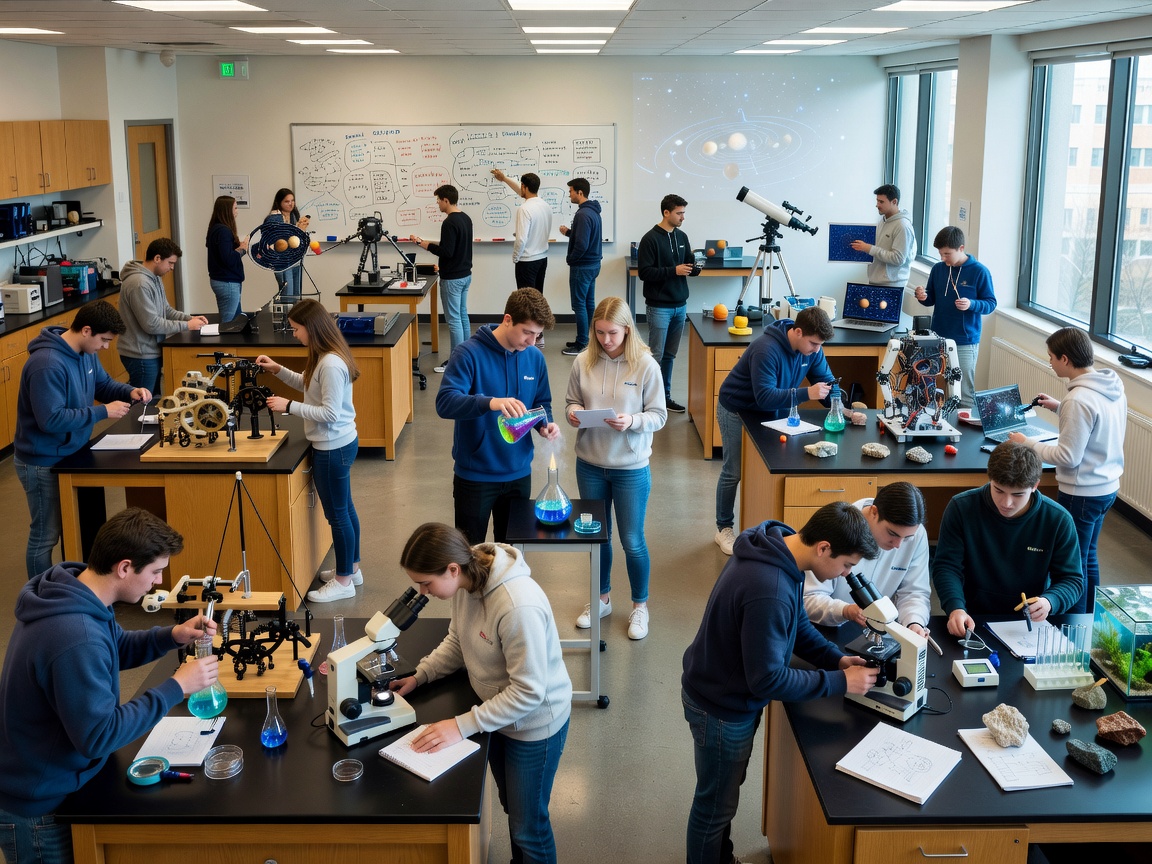
Laboratory activities usually provide a controlled setting for observation and measurement. Field activities place questions in a real environment, where conditions can change. A project format may combine both and ask students to plan, test, document and present a small investigation. Check whether activities are demonstrations, guided tasks or student-led choices.
Broad programs give students a chance to discover unfamiliar areas and connect ideas. Their limitation is reduced specialist depth. A student already committed to a single subject may prefer a focused biology, engineering or astronomy program. Compare the time assigned to each strand and how much practical work is included.
Age groups and group formats
Age bands indicate a starting point, not a guarantee of fit. Check whether reading, numeracy, language, mobility or prior knowledge expectations are stated. Ask how activities are adapted for different experience levels. Group work can support discussion, but students should still have an individual role in recording or explaining observations.
Ask about group size, adult supervision, staff qualifications relevant to activities, safeguarding procedures and how support is handled during off-site sessions. Request clear information about accessibility, medical needs and the process for raising concerns.
Equipment, accommodation and duration
Find out what the program supplies and what students must bring. Protective equipment and specialist tools should be provided and managed according to the activity and institutional procedures. Do not assume students need to purchase equipment. Check clothing and footwear requirements for outdoor work, along with weather alternatives.
For residential options, confirm who manages accommodation, meals, supervision outside sessions, travel arrangements and emergency contact procedures. These details vary. Obtain them directly from the organiser before committing. Compare the total schedule, not only the headline activity hours.
Good for
A multidisciplinary format can suit curious beginners, students weighing up several interests and mixed groups who benefit from a shared science theme. It can also work for schools seeking varied activities in one program. Specialist learners may get more value from a dedicated subject route.
What to check
- Published age range, prerequisites and learning support.
- Session plan, practical time and field-to-lab balance.
- Instructor roles, supervision and safety procedures.
- Group format, accessible participation and equipment provision.
- Duration, breaks, travel, accommodation and cancellation terms.
Ask how students document work and receive feedback. A clear review stage helps make the program's purpose visible without promising a particular outcome.
Making the comparison
List the student's main interests first. Then compare schedules, suitability and logistics in the same order for each option. Separate confirmed details from assumptions. Seek written answers where safety, accessibility or residential arrangements matter. A well-matched program is one whose format and support make sense for that student—not simply the one with the broadest topic list.